Mandala Thangka
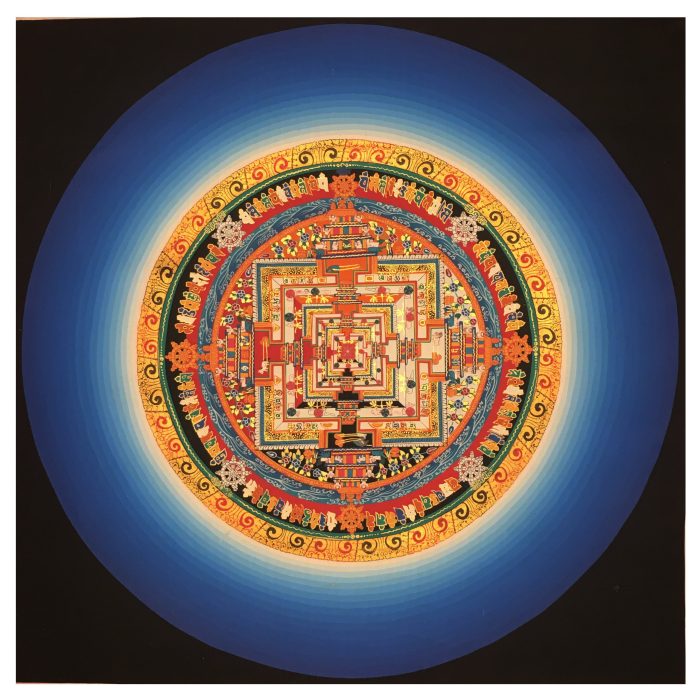
Kalachakra Mandala
$ 125.00
free worldwide shipping
This thangka is painted and waiting in our Kathmandu studio. It ships as soon as your payment clears — about 3–5 days in transit.
- Certificate of authenticity
- Ships rolled & insured, about 3–5 days
- Consecration on request
- Free worldwide shipping
Materials & Technique
Painted on hand-primed cotton canvas using stone and mineral pigments, finished with genuine 24k gold. The composition follows traditional iconometric grids taught in our school.
Shipping & Packing
Free worldwide shipping. Your thangka is rolled in acid-free tissue inside a rigid tube, fully insured, and dispatched with tracking. Anything that arrives damaged, wrong, or not as described we put right whenever it happens.
Brocade Mounting & Framing
On request we mount your thangka in traditional silk brocade with wooden dowels, ready to hang — the way thangkas are displayed in monasteries. Brocade mounting adds 1–2 weeks and $60–120 by size. Ask us on WhatsApp and we will arrange it.
Consecration & Blessing
We can take your thangka to a revered monastery in Kathmandu for consecration before shipping. Through prayers and sacred invocations, the painting becomes a living support for practice. Ask us on WhatsApp — it is free, and adds about a week.
The story in the painting
The Story in the Painting
The Kalachakra Mandala is the most popular mandala among other. Literally Kala is time and chakra is wheel in Sanskrit language. So, Kalachakra is the wheel of time. This mandala was first ever designed by HH 14 Dalai Lama through sand powder on the floor to give the message of impermanence. This mandala has three major ways of significance artistic, cultural and philosophical perspective.
Artistically, mandala means circle that is universe or cosmos. This mandala has six circles; first one is universe and others are sky, air, fire, water and the earth respectively. On the other side, it has four entrances representing four directions. The core of mandala has lotus flower which signifies happiness or human kind. Three minor doors are three major keys of us. The first one is feeling, the second is speech and third is our thought.
Culturally, mandala is the palace of happiness which we see in stupa. Buddhist people make clock ways round reciting mantra of compassion and wisdom. They pray and spin the prayer wheels prostrating with thinking, speaking and feeling for peace and happiness.
Philosophically, it is way of meditation, here we see three minor doors they are enlightenment of body, speech and mind. At last, we can see square mandala of wisdom and final is lotus as emptiness of negative emotions.
Collector reviews
What collectors say
No reviews yet for this piece.
You may also love


Reviews
There are no reviews yet.